THE SHORT ANSWER.
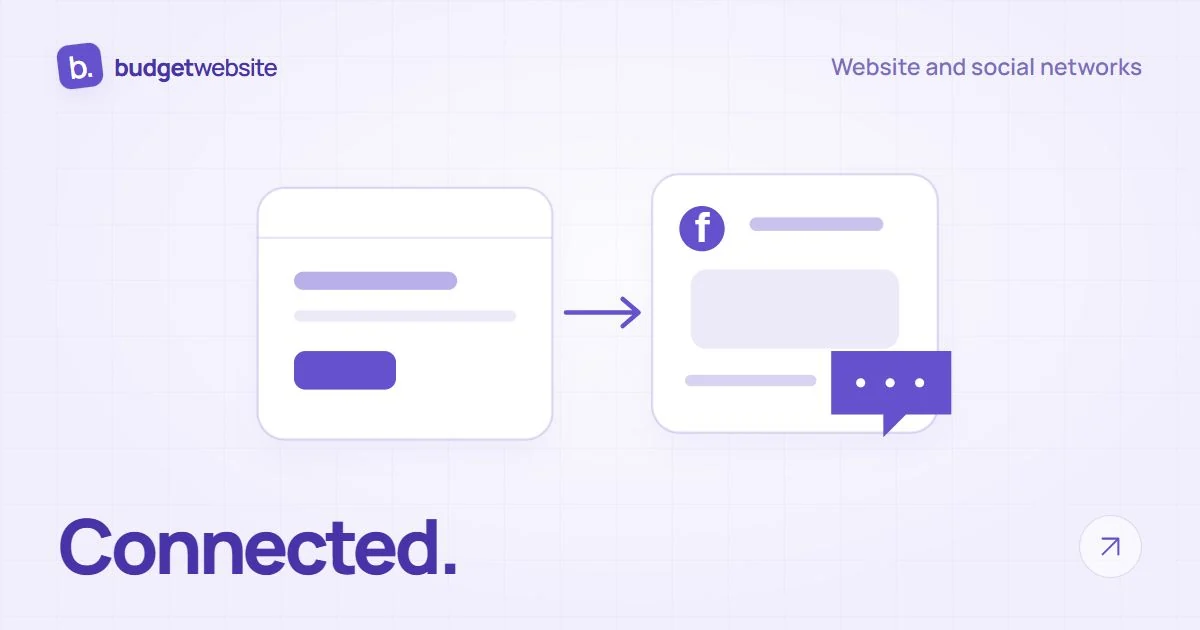
Social networks can generate interest and conversation, and the website can gather ongoing information and facilitate choice. The two channels work best when they have clear roles and a connected path to inquiry.
A website or Facebook page is a question that often comes after the first successful posts. You have an audience, people are writing to you in person, and the business is getting attention. It’s completely understandable to ask yourself why you need another channel.
Imagine a salon in Sofia with an active page and several thousand followers. The photos attract interest, but the new person has to search for prices between posts and ask for the address. The page does a good job for the first meeting. A well-organized website can make the choice easier after that.
The goal is not to choose a winner in the “website vs. social media” debate. It is more useful to determine which channel has what task and how the visitor goes from interest to a specific query.
Website or Facebook page: where do you have more control?
In the social network, you use an environment with rules that you don't define yourself. The platform chooses the formats, the order, and the way it distributes the content. You can manage your own posts and settings, but not the entire experience around them.
With your own website, you have more control over the address, structure, and presentation. You can decide how the service page looks, which questions to answer, and what actions to offer. Important information should not follow the order in which you published it.
This does not mean that the site is independent of any external service. It also relies on a domain, hosting, and sometimes paid tools. Clarify who owns the registrations, who has administrative access, and how the content can be moved if necessary.
Check access to social profiles as well. Do not leave management solely in the personal account of a former employee. Maintain clear roles, a reliable way to recover, and additional login confirmation when the platform offers it. The own website complements this care, not replaces it.
Followers are not a list of people who see everything.
The number of followers and the number of people who have seen a specific post are different metrics. Organic reach is the distribution without paid advertising. This can change depending on the content, the audience, and the way the platform organizes the posts.
Therefore, don't expect every customer to have seen the new working hours or the current price. Check the metrics on the own page instead of using an arbitrary average percentage. A publication that works well for a restaurant is not automatically a reference for a company providing technical services.
Important conditions must have a permanent address. When a client asks what a certain procedure involves, you can send them the service page. It can gather the description, preparation, price, and the method of registration without a new conversation from the beginning.
This allows you to post more freely on social media. It is not necessary for every photo to contain all the information about the business. It is enough to have a clear link to the correct place when the person is ready to learn more.
What does the person who seeks a service discover?
When searching for “hairdresser Sofia Lozenets”, various results can appear: maps, websites, directories, and profiles. The order depends on the query and the context. It is not correct to promise that a personal website will always surpass a social page.
The benefit is that you can create a specific page for the specific service and location. It has its own title, description, and information that the person can check. When the data matches those in the profile in the cards, the customer receives a more consistent presentation.
However, a personal website does not appear in good positions just because it exists. The content needs to be useful, the pages need to be accessible to search engines, and the information needs to be maintained. First, think about which questions you want to answer, and then how to organize them.
What is the task of each channel?
The following comparison is a starting point. Some features depend on the platform, the country, and the tools used. Check your specific configuration when planning reservations or payments.
| Question | Own website | Facebook page |
|---|
Who determines the structure? | You, within the chosen solution | The platform determines the main formats | | Where does the important information sit? | In permanent pages for services and contacts | In the profile, publications and available sections | | How do you reach the audience? | Through search, advertising, recommendations and links | Through publications, sharing and advertising | | How do you display a service in detail? | With a separate page and its own layout | With the available formats and a link to more information | | How do you accept a reservation? | With a contracted form or an external system | According to the available features or through messages | | How do you measure interest? | With set tools and selected actions | With the metrics provided by the platform | | What are the costs? | Development, domain, hosting and agreed maintenance | Time for content and advertising budget | | What can you transfer? | According to ownership, access and contract | According to the platform's download capabilities |
How to connect them into a working path to the customer?
For a salon, the publication can display a result of a procedure and lead to a page with terms and conditions and booking. For a small hotel, the photo can create interest and the website can display the rooms and the way to check availability. For a manufacturer, the individual product deserves more information than a short post.
Choose the right page for the link. If the post is about a specific service, the general landing page may add unnecessary searching. Point the person to the place where the next logical answer is.
Offer a contact channel that you actually monitor. This could be a phone number, a form, Viber or WhatsApp. If all the buttons lead to different conversations, specify who handles the inquiries and how important information is collected in one place.
A newsletter form is only useful if you have a reason to send content and a clear way to subscribe and unsubscribe. Don't add it as a mandatory part of every website. First make the basic contact easy, and then develop the other connections with the audience.
Three checks you can do today
First, send the link to your page to someone who doesn’t know the business. Ask them to find a specific service, address, and contact method. Don’t give any hints. The difficulties show what information needs to be made clearer.
Second, compare the data in social media, the website, and the maps. Review the phone, the working hours, and the conditions. An old post is not a problem in itself, but the conflicting, current information can confuse the choice.
Thirdly, choose one action you want to lead the visitor to. Is it a call, a request, or a booking? This is what turns your own website into a website as a marketing tool, rather than a list of generic text.
If you still assess the need for a website yourself, start with „Do I need a website?“. The important thing is to organize the channels around the customer’s behavior, not around the number of profiles you can create.
Give interest a clear place for the next step
Are you already active on social media? Let's organize the place where your followers can understand the offer and become customers. Tell us what's working now and where the conversation is getting lost.